

What to Do Sophomore Year of High School: A College Admissions Checklist
Introduction
If you are wondering what to do sophomore year of high school, it can feel early to think about college. Junior year still seems far away, and many families assume planning starts later. In reality, decisions made in 10th grade shape what is possible in junior and senior year.
This is not about adding stress. It is about making a few smart decisions now so future options stay open. This checklist is a practical guide to help students stay on track.
Why Sophomore Year Is a Turning Point for College Admissions?
Sophomore year of high school college planning is where students either stay on track in 10th grade or begin to fall behind without realizing it. By junior year, a student’s course load is largely determined by what they completed in 10th grade.
Junior year schedules depend on sophomore year sequencing. For example, a student who takes Algebra II in 10th grade can usually move to Precalculus or Calculus later. A student who slows that sequence may not reach advanced math before graduation. The same pattern applies to lab sciences and foreign language.
Admissions officers review course rigor starting in 9th and 10th grade. They are not only looking at senior year classes. They want to see consistent academic progression across all four years.
They also evaluate course context. This means they read a student’s transcript alongside the school profile. The school profile explains what courses are offered and when students typically take Honors, AP, or advanced classes. Admissions officers use this to understand whether a student challenged themselves within their school’s offerings.
Because of this, 10th grade is a key decision point. It determines whether a student maintains academic progression or limits future course options.
Academic Priorities in 10th Grade
Academic decisions in 10th grade shape what is possible in junior and senior year. A strong 10th grade college prep checklist focuses on keeping future course options open, not just choosing what feels manageable now.
Confirm the Right Math Sequence
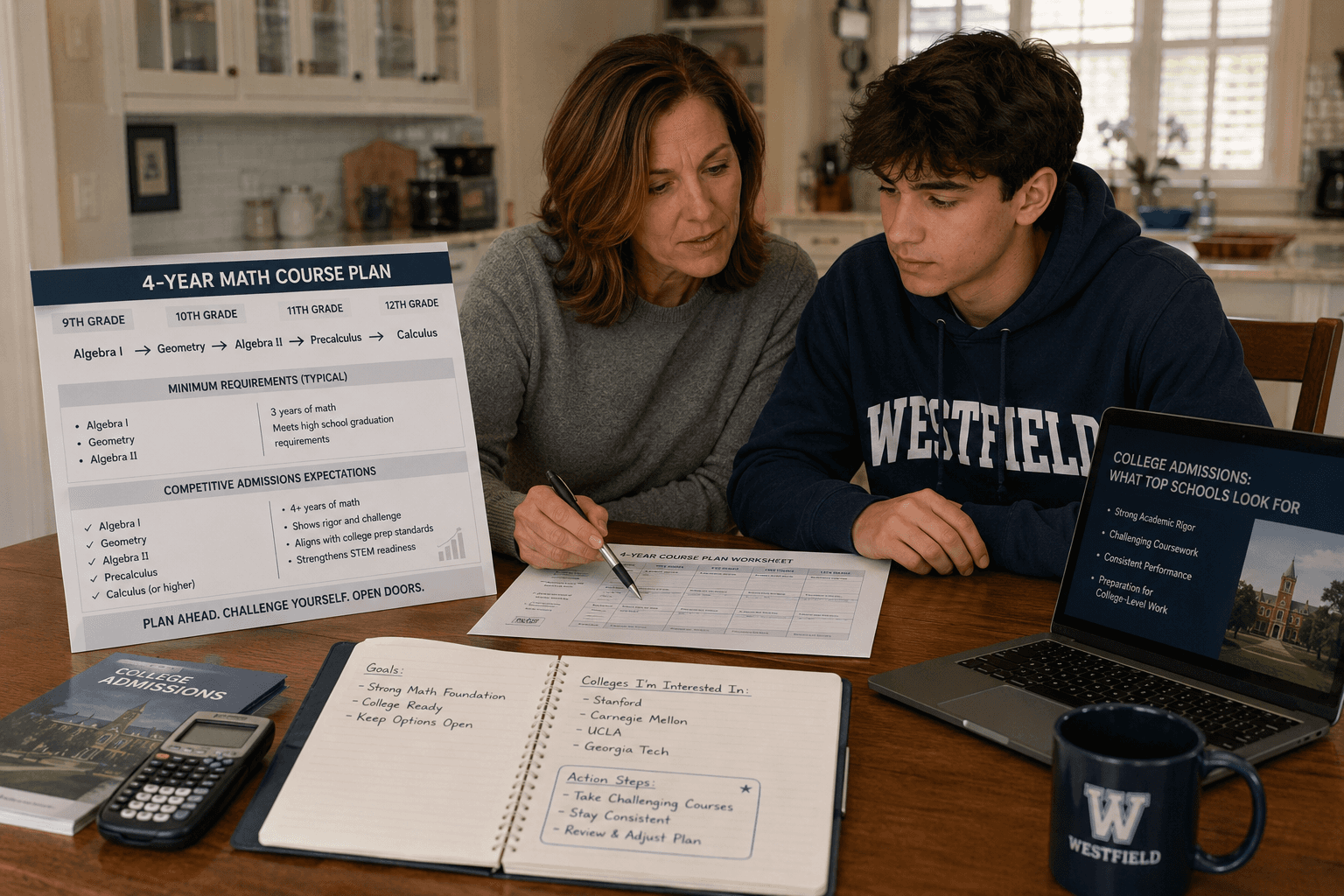
Math is the most important course decision in sophomore year college admissions because it is difficult to accelerate later. Course sequencing determines whether a student can reach advanced math by senior year.
Common progressions include:
Geometry → Algebra II → Precalculus → Calculus
Algebra II → Precalculus → Calculus or Statistics
Students who move to an easier track to protect GPA in 10th grade may limit access to advanced math later. Catching up is difficult because math builds sequentially, and most schools do not allow students to skip ahead once the sequence changes.
Not every student needs the most accelerated track. The key is understanding which options remain available based on the sophomore decision.
Continue a Strong Science and World Language Progression
Students should continue core academic sequences without gaps:
Science: stay on a lab science track each year
World language: continue the same language to reach three to four years
Stopping early can limit course rigor in later years and affect how the transcript is evaluated. Strong transcripts are built through consistent progression.
Decide Whether a First AP Makes Sense
Some students are ready for a first AP or additional honors course in 10th grade. Others benefit more from strengthening their foundation before junior year.
A first AP can make sense if:
the student has strong academic performance
the subject aligns with their strengths
the overall schedule remains manageable
Common sophomore options include AP World History, AP Human Geography, AP Seminar, and AP Computer Science Principles. In many cases, it is appropriate to wait until junior year, when more AP options are available.
Extracurricular Development in 10th Grade
Freshman year often looks exploratory, and that is normal. Students try activities to see what fits. Sophomore year is when those patterns should start becoming clearer.
Many students respond by adding more. In most cases, what to do in sophomore year of high school is the opposite. Students should narrow their focus to two or three meaningful areas and begin developing them with intention.
Admissions readers pay attention to trajectory. They notice continued involvement, increased responsibility, initiative, and deeper contribution more than a long list of unrelated activities.
Focus on Depth in Extracurricular Activities
A student who is lightly involved in many unrelated activities often appears less developed than one who is meaningfully invested in a few.
Those areas can include athletics, music, academic clubs, research, creative work, part-time employment, volunteering, or community involvement. The goal is not to choose what sounds impressive. It is to choose where there is room for visible growth.
Sophomore year is the right time to begin making these distinctions.
Look for Growth and Initiative in Activities
Leadership does not need to mean a formal title in 10th grade. Colleges are not expecting every sophomore to hold a top position.
What matters is momentum. This can include:
taking on more responsibility
helping organize events
mentoring younger students
starting a small independent project
Students should focus on where they are becoming more skilled, more reliable, and more engaged.
Use the Summer After 10th Grade Intentionally
The summer after sophomore year is often the first opportunity to strengthen readiness for junior year.
This does not need to involve expensive programs or résumé-driven choices. In many cases, a strong summer is simple:
a class or academic interest
part-time work
consistent volunteering
a personal or skill-based project
The best choices build on what the student is already doing rather than adding something unrelated.
The PSAT — Why Sophomores Should Take It Seriously
Many students treat the sophomore PSAT as a practice test. That is true in terms of scoring, but it is still an important step in sophomore year of high school college planning.
The sophomore PSAT provides a baseline before junior year, when scores are used for National Merit consideration. Taking it seriously allows students to understand their starting point without pressure.
The test focuses on two main areas:
Reading and Writing
Math
Score reports break these sections into smaller skill areas. This helps identify specific strengths and gaps. For example, a student may be strong in algebra but need work in advanced problem solving, or perform well in reading but struggle with grammar.
This information is useful because there is still time to adjust. Students can focus on weaker areas, build skills gradually, and approach junior year testing with a clearer plan as part of the broader admissions timeline.
What a Curriculum Review Is (and Why 10th Grade Is the Right Time)
By 10th grade, many families want to know if a student is on track but are not always sure what to evaluate. A curriculum review provides a clear, structured way to answer that question.
A curriculum review is a planning process that looks at a student’s current academic and extracurricular path against what selective colleges expect. It identifies gaps, confirms strengths, and clarifies what decisions need to be made before junior year. This is not college counseling or application work. It is a focused review of course and activity planning.
A curriculum review typically covers:
math and science sequences
AP and honors course planning
world language progression
elective strategy
extracurricular direction
junior year course options
The timing matters. Sophomore year still allows adjustments. Once junior schedules are finalized, course options are harder to change. Reviewing the plan in 10th grade helps ensure that future choices remain available. This process also connects to the broader approach of how to plan for college in high school across all four years.
The Sophomore Year College Admissions Checklist
If you are deciding what to do sophomore year of high school, the goal is clarity, not intensity. A strong 10th grade college prep checklist should help families confirm that the right pieces are in place before junior year.
Academics
Confirm that the current math sequence keeps advanced options open for senior year
Continue lab science and world language without gaps
Consider one AP or honors course if it fits the student’s readiness
Maintain strong semester grades across core subjects
Extracurriculars
Narrow involvement to two or three genuine interests
Look for increased responsibility or initiative within current activities
Plan a summer that builds on existing interests
Testing
Take the PSAT to establish a baseline for junior year
Review section and subscore patterns, not just the total score
Identify areas in Math or Reading and Writing that need improvement
Planning
Complete a curriculum review before junior year course selection
Begin exploring broad college categories without pressure
Plan junior year courses with long-term flexibility in mind
A Small Amount of Planning Now Prevents a Lot of Stress Later
Sophomore year is one of the most underused windows in the college admissions process. Students who make a few intentional decisions in 10th grade often enter junior year with more options, less stress, and a clearer direction.
If you would like a more structured understanding of where your student stands, you can start with a free consultation. At Friedman College Consulting, families receive clear, step-by-step guidance tailored to the student’s path.
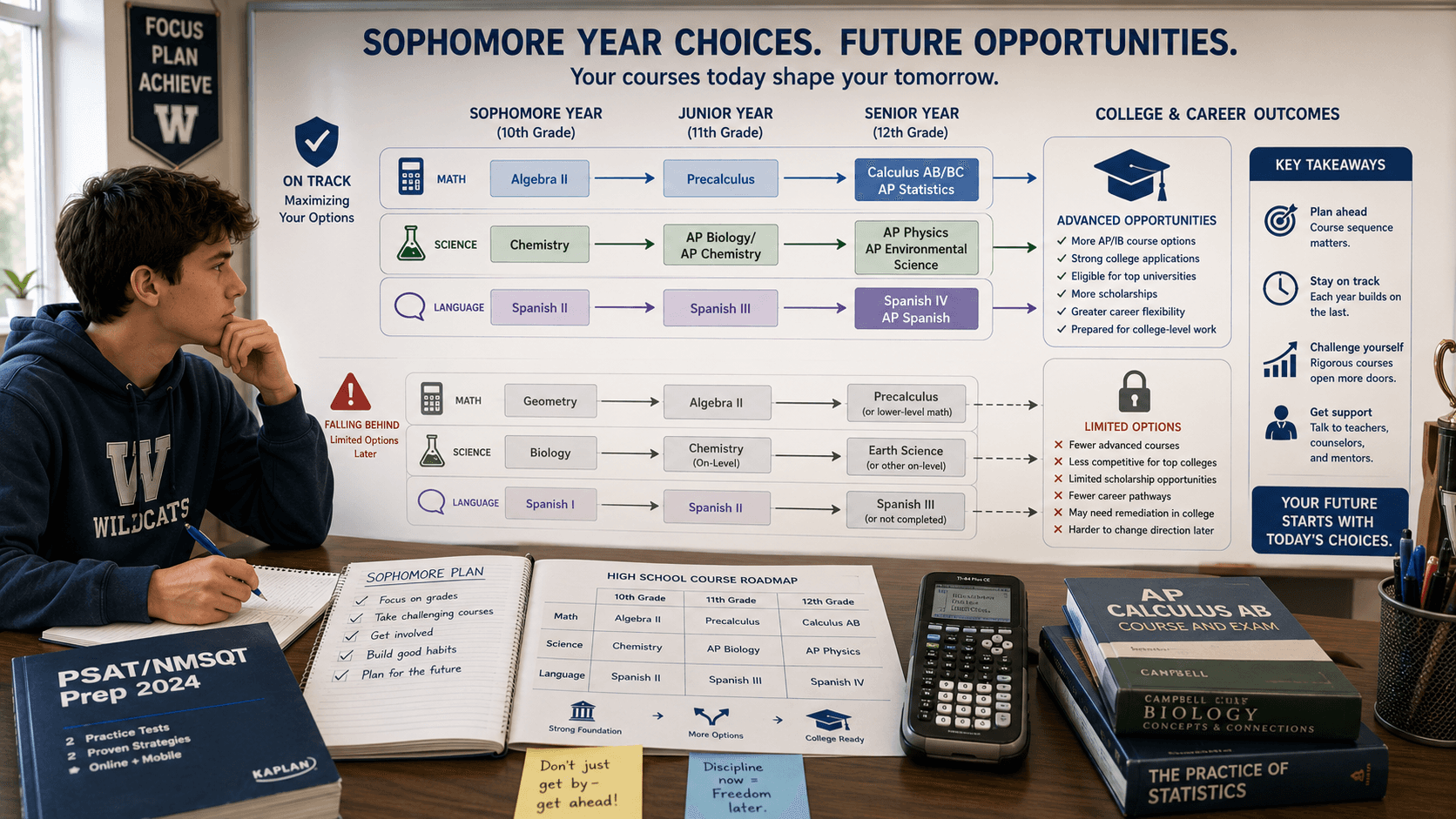
Table of Contents
Frequently Asked Questions
What should a sophomore do to prepare for college?
Does sophomore year GPA matter for college admissions?
What AP classes should a sophomore take?
What is a curriculum review for high school students?
How important is the PSAT for sophomore students?
If you are deciding what to do sophomore year of high school, focus on four areas: academics, extracurriculars, testing, and planning. Stay on a strong course sequence, narrow activities to a few meaningful commitments, take the PSAT to establish a baseline, and map junior year before schedules are finalized.
Yes. Colleges review grades across all four years. Sophomore year GPA is part of that pattern and is considered alongside course rigor. Strong grades in appropriately challenging classes matter.
There is no required list. Some students may take an introductory AP such as AP World History, AP Human Geography, AP Seminar, or AP Computer Science Principles. This only makes sense if the student can handle the workload without affecting overall performance.
A curriculum review is a structured planning process. It evaluates a student’s course sequence, rigor, and extracurricular direction to confirm that future college options remain open. It also identifies gaps before junior year limits flexibility.
The sophomore PSAT is a baseline, not a final result. The junior-year PSAT is used for National Merit consideration. Sophomore results help identify areas in Reading, Writing, and Math that need improvement before testing becomes more important.
Recent posts





Schedule Now
Related Articles
Your go-to source for mental health insights, tools, and advice.



FAQ