

How to Plan for College in High School: A Year-by-Year Schedule Guide
Introduction
Most families start asking how to plan for college in high school during junior year. That is when the SAT or ACT, AP classes, and application deadlines start to feel urgent. By then, many important decisions are already in place.
Course choices made in 9th and 10th grade shape what a student can take later. A student is often already set on a math track, science sequence, and foreign language path by junior year. These sequences are difficult to change without losing progress.
This can feel overwhelming at first. It becomes manageable when you understand what matters each year. To plan for college in high school, you need a clear sequence of decisions. Each year builds on the one before it.
Why Does College Planning Start in 9th Grade (Not Junior Year)?
Many families assume college planning begins with SAT or ACT prep or building a college list. In reality, colleges review all four years of high school. They read a student’s transcript as one continuous academic record.
This is where high school course planning for college becomes important. Decisions made in 9th grade affect what is available in 11th and 12th grade. Course sequencing determines whether a student can reach advanced classes by senior year.
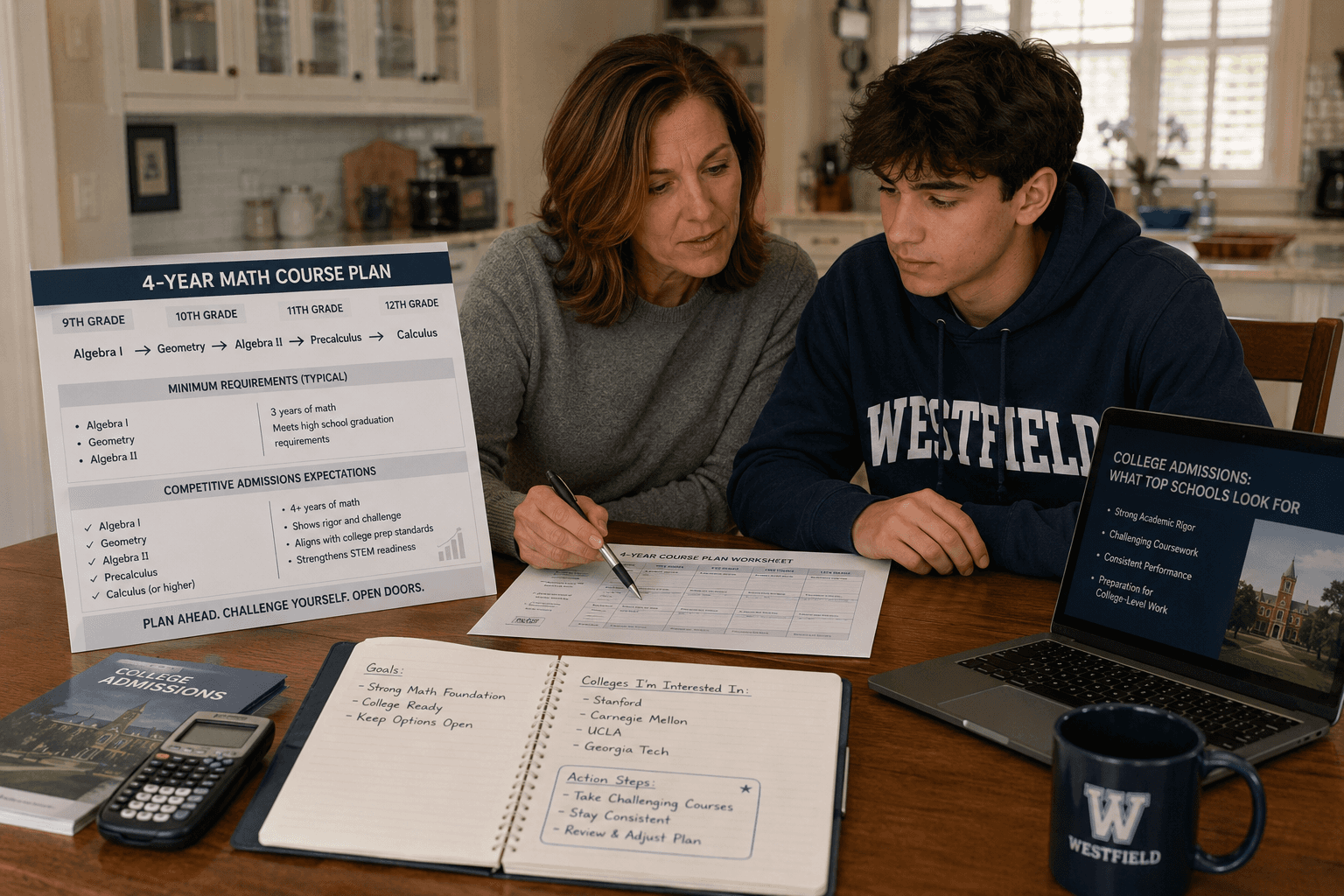
Course rigor refers to how challenging a student’s schedule is based on what the school offers. It builds over time. For example, a student who takes Algebra I in 9th grade can progress to Geometry, Algebra II, Precalculus, and then Calculus. A student who starts at a lower level may not reach Calculus before graduation.
The same pattern applies to foreign language and laboratory science. Starting a language in 9th grade allows for four years of study. Starting later often limits a student to two or three years. Many colleges expect students to take the most rigorous courses available in core subjects such as English, math, science, social studies, and foreign language.
A weaker 9th grade can also affect the overall academic record. Colleges look for consistency and growth. Strong performance later helps, but early grades still count. Planning for college in high school means understanding that early course choices keep options open later.
Freshman Year (9th Grade) — Building the Foundation
Freshman year (9th grade) is where high school planning begins. Understanding what to do freshman year of high school helps keep future options open. This year focuses on building academic habits that support the next three years. Students adjust to a faster pace, manage homework, prepare for exams, and communicate with teachers. A strong GPA starts with consistent performance, not early acceleration.
Course placement is one of the most important decisions in 9th grade. Families should focus on math placement and foreign language. These sequences shape what a student can take in senior year. In many New York and New Jersey schools, math tracks begin in 9th grade. Starting on track allows progression to Precalculus or Calculus. Moving off track can limit access to advanced courses. Beginning a foreign language in 9th grade also allows for four years of study.
Extracurriculars should start with exploration. Students should try a few activities that reflect their interests and continue over time. Colleges look for consistency and growth, not early leadership.
Avoid overloading on advanced classes. Most schools do not offer AP courses in 9th grade. Early acceleration without a strong foundation can affect grades. Freshman year is part of the final transcript and is reviewed by most colleges.
Common 9th Grade Mistake: Taking on Too Much Too Early
Taking on too many advanced classes can lead to lower grades and inconsistent performance. Freshman year should be challenging but manageable, with steady academic results.
Sophomore Year (10th Grade) — Keeping Doors Open
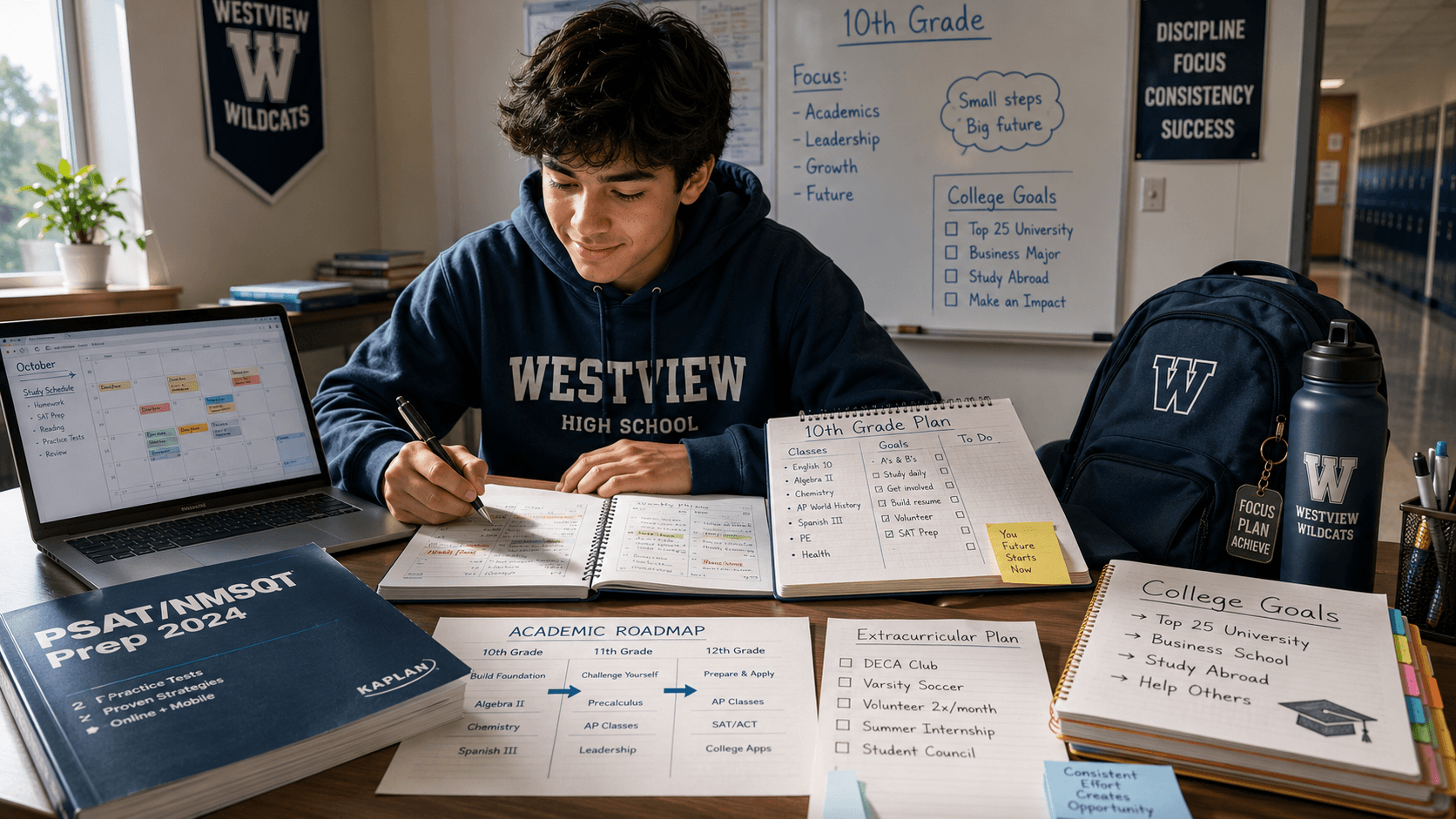
Sophomore year (10th grade) is where high school course planning for college becomes more structured. This is when a college prep curriculum for high school students starts to take shape. Families should choose next year’s courses while also looking ahead through 12th grade.
Course sequencing is critical. If a student completes Algebra II in 10th grade, they can usually take Precalculus in 11th and Calculus in 12th. The same applies to laboratory science and foreign language. Continuing these subjects each year helps maintain academic rigor.
This is also the right time for a four-year curriculum review. Families should map remaining courses against graduation requirements and available advanced classes. This helps clarify what is still possible by senior year.
The PSAT in 10th grade should be used as a diagnostic tool. It shows strengths and gaps in reading, writing, and math. The score is not used in college admissions. The goal is to prepare for SAT or ACT testing in junior year.
Extracurriculars should begin to narrow. Students should focus on a few activities and stay consistent. Colleges look for depth and sustained involvement over time.
Junior Year (11th Grade) — The Most Important Academic Year
Junior year (11th grade) is the most important academic year in high school planning. It includes the highest level of coursework completed before applications and the most recent full year of grades colleges review.
Students need a clear rigor strategy. This means selecting AP, IB, or Honors courses with balance. The goal is to show challenge while maintaining strong grades. In many cases, 3 to 4 well-managed AP courses present a stronger record than a heavier schedule with declining performance.
Standardized testing should follow a clear timeline. Most students take the SAT or ACT in the winter or spring of junior year, allowing time to review scores and plan a retake if needed.
College list research should begin during this year. Students should identify schools that fit their academic profile, interests, and budget. This is where planning for college in high school becomes more concrete.
Students should also prepare for recommendation letters and essay development. By late spring, they should identify two teachers who can speak to their academic work and begin noticing patterns in their experiences.
Summer after junior year should be intentional, such as:
an internship
an academic program
a research project
a part-time job or independent work
The focus should be on sustained interest and consistent effort.
Senior Year (12th Grade) — Executing the Plan
Senior year is where planning for college in high school becomes execution. If earlier steps were handled well, students follow a clear process instead of reacting to deadlines.
First semester grades still matter. Colleges review senior coursework and often request midyear reports. Students should maintain consistent academic performance through the fall.
The application process follows a clear admissions timeline that includes testing, essays, and deadline. The Common Application opens on August 1. Early Decision and Early Action deadlines usually fall in early November, while Regular Decision deadlines are often in January. Students need to track each school’s requirements carefully.
Supplemental essays require focused planning. Each college may ask different questions, so students should allow time to draft and revise without rushing.
Financial aid runs on a separate schedule. The FAFSA opens in the fall, and some colleges require the CSS Profile. Deadlines vary, and missing them can affect aid eligibility.
Organization keeps the process manageable. Students should track deadlines, essays, and required materials in one place, such as a simple spreadsheet or calendar.
After submitting applications, students should stay engaged in school and activities. Colleges may request updates, and final transcripts are reviewed. In the spring, students compare admission offers, financial aid packages, and overall fit before making a final decision.
What Colleges Are Actually Looking for in a High School Transcript?
Families often assume admissions officers count AP classes and compare GPA in isolation. In practice, transcript review is contextual.
Colleges evaluate how a student used the opportunities available at their school. This is often called course rigor in context. A B+ in AP Calculus or AP Biology can show stronger preparation than an A in a standard-level course if the more advanced option was available. A competitive transcript shows consistent challenge and steady performance over time.
This context is especially important in New York and New Jersey. Course offerings vary by school. Some schools offer AP classes starting in 10th grade. Others concentrate advanced courses in 11th and 12th grade. Some private schools use Honors sequences instead of a large AP program. Admissions officers review transcripts alongside the school profile, which explains what courses are available.
An upward trend can strengthen an application. Improvement from 9th to 11th grade shows growth and adjustment. However, a late increase in rigor cannot fully offset several years of limited challenge. Colleges look for a pattern of appropriate course difficulty across all four years.
Understanding how transcripts are evaluated helps families make better decisions early. High school course planning for college should focus on steady progression within the school’s offerings, not on comparing schedules to other students.
A Good College Plan Is Built One Year at a Time
Planning for college in high school does not mean adding pressure. It means making clear decisions each year so future options stay open. When planning starts early, senior year becomes a time to follow through, not fix gaps.
Many families only see constraints in junior year, when course and testing options are harder to adjust. A simple review of your student’s current path can clarify what is still possible and what should come next.
If you are unsure where your student stands, you can start with a free consultation to understand your next steps. You will work directly with Sydney throughout the process, with clear guidance at each stage.
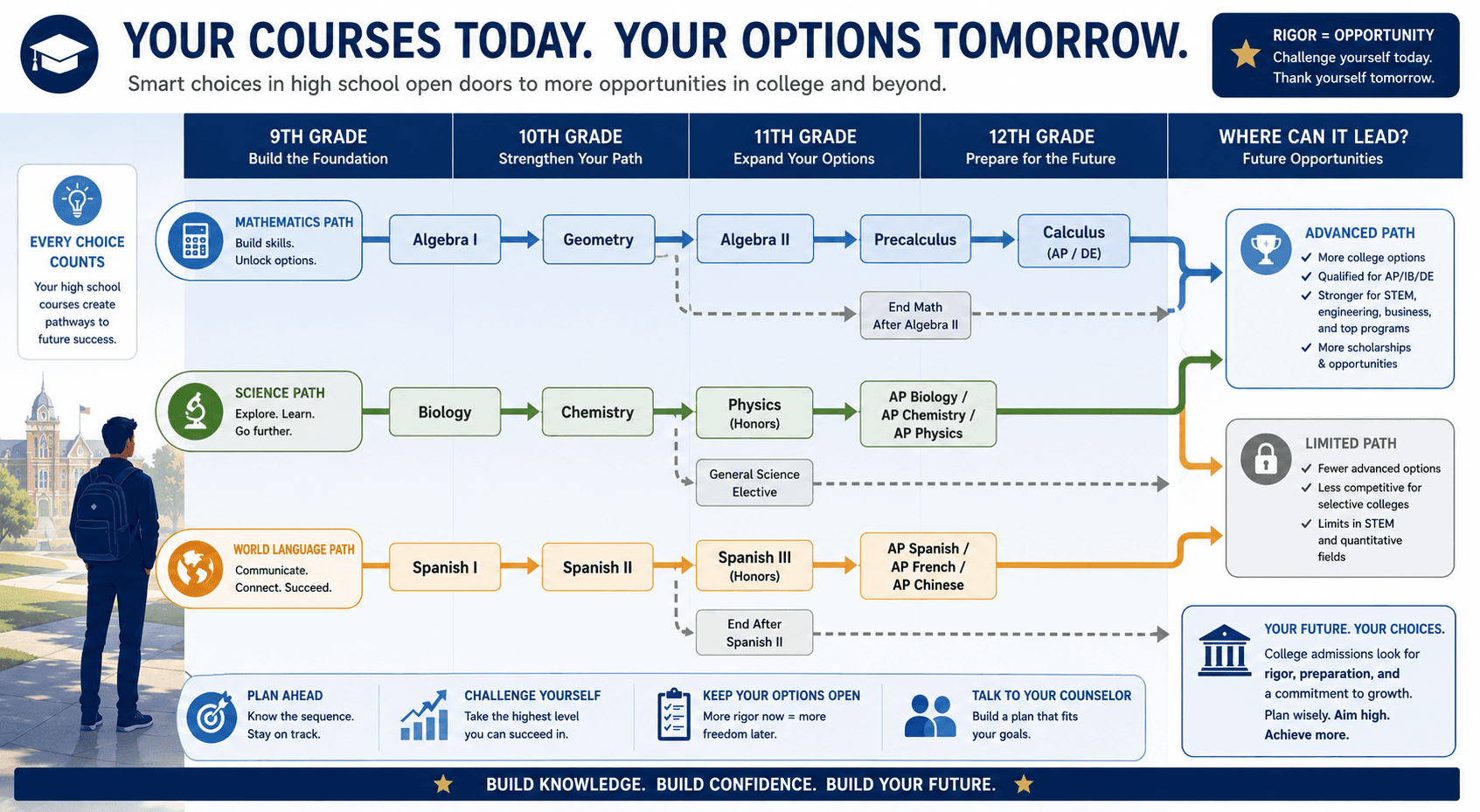
Table of Contents
Frequently Asked Questions
When should a student start planning for college?
What high school courses look best for college admissions?
How many AP classes should a student take in high school?
Does freshman year GPA matter for college admissions?
What is the most important year of high school for college applications?
A student should start planning for college in high school before or during 9th grade. By junior year, most students are already set in a math, science, and foreign language sequence that is difficult to change. Early planning keeps more academic options available.
A strong transcript usually includes four years of core academic subjects when available: English, math, science, social studies, and foreign language. This often means progressing to Precalculus or Calculus, continuing a language through senior year, and adding Honors or AP courses at the right time. A well-structured college prep curriculum for high school students shows consistent academic progression.
There is no fixed number. Admissions officers do not reward the highest AP count. In many cases, 3 to 4 well-managed AP courses across junior and senior year present a stronger academic record than a heavier load with declining grades. The focus should be on balance and sustained performance.
Yes. Colleges review all four years of high school. Freshman year grades are part of the full transcript. A lower GPA in 9th grade does not prevent admission, but it does affect the overall academic record and may limit flexibility later.
Junior year usually carries the most academic weight. It includes the highest level of coursework completed before applications and the most recent full year of grades. Its impact depends on the course sequencing and habits built in 9th and 10th grade.
Recent posts




Schedule Now
Related Articles
Your go-to source for mental health insights, tools, and advice.





FAQ